
In streetwear production, the difference between a strong sample and a disappointing one often comes down to how clearly the fabric is specified in the tech pack. Many emerging brands focus heavily on design elements like graphics and silhouettes but overlook the fabric page — and this is where issues begin.
If fabric instructions are unclear, factories are forced to interpret your intent. That usually leads to incorrect materials, poor sample results, and delays in development. A well-structured fabric page removes this uncertainty by clearly defining what fabric should be used, how it should feel, and how it should perform.
For streetwear pieces like hoodies, t-shirts, cargos, and joggers — where fabric plays a major role in the final product — getting this right is essential.
Why the Fabric Page Matters
Factories rely on precision. If your tech pack simply states, “heavy cotton,” it leaves too much open to interpretation. What feels like a clear description to you can mean very different things across different suppliers and factories.
“Heavy cotton” could refer to:
- Cotton single jersey
- Cotton double jersey/interlock
- Cotton rib
- Cotton twill
- Cotton canvas
- Cotton French terry
- Cotton fleeceback
Each of these fabrics behaves differently in terms of stretch, structure, and finish. Even the definition of “heavyweight” can vary significantly depending on the manufacturer.
A clear fabric page helps you:
- Ensure consistent quality across samples and production
- Avoid incorrect fabric substitutions
- Communicate exact material expectations
- Reduce sampling revisions
- Protect your brand’s product standards
Streetwear is heavily driven by fabric feel and weight, so this level of clarity is critical.
What Every Tech Pack Fabric Page Should Include
A strong fabric page doesn’t need to be overly complicated, but it must be specific. Each element plays a role in helping the factory understand your design from a technical perspective — not just a visual one.
1. Fabric Name & Composition
This is the foundation of your fabric specification. It tells the factory what type of material you are working with and what fibres it contains. Without both, the factory only has a partial understanding of your requirements.
Example:
- Fabric Name: Single jersey
- Composition: 100% Cotton
Or:
- Fabric Name: French Terry (brushed)
- Composition: 60% Cotton, 40% Polyester
The composition is particularly important because it affects how the garment behaves — including softness, durability, and shrinkage.
2. Fabric Weight (GSM)
In streetwear, GSM (grams per square metre) is one of the most important specifications. It defines how heavy, thick, and premium the fabric will feel.
Without GSM, terms like “lightweight” or “heavyweight” are subjective and can vary widely between suppliers.
Common examples:
- 140–180 GSM – Lightweight T-shirts
- 200–240 GSM – Standard streetwear tees (still feels heavy)
- 280–320 GSM – Heavyweight T-shirts (feels very heavy)
Getting this right ensures your garment has the intended structure and feel.
3. Fabric Finish
Fabric finishes influence both the appearance and performance of your garment. This is where you define how the fabric should feel to the customer and how it should behave over time.
Examples include:
- Mercerised
- Enzyme washed
- Anti-pilling finish
- Brushing
- Anti-bacterial finish
- UPF protection finish
These finishes can elevate a product from basic to premium, so they should never be left unspecified.
4. Colour Specification
Colour is one of the most common areas where miscommunication occurs. Descriptions like “beige” or “baby blue” are not precise enough, as colour tones can vary significantly.
Using Pantone codes provides a universal reference point that manufacturers can follow.
Example:
- Colour: Pantone 7546 C
This ensures the closest possible match to your intended colour, whether using stock fabric or custom dyeing. Keep in mind that custom dyed fabric is only possible in high MOQ’s due to the work involved – low MOQ manufacturers match stocked fabrics to Pantone colours.
5. Fabric Codes & Supplier (If Applicable)
If you have sourced fabric from a supplier or selected from a swatch card, including those details removes guesswork entirely.
Example:
- Fabric: ABC Textiles
- Fabric Code: #2315
- Colour Code: #9
This allows the factory to identify and source the exact material, rather than approximating it.
6. Fabric Swatch Reference
Including a visual reference strengthens your tech pack and helps align expectations.
This can be:
- A photo of the fabric swatch
- A scanned image of the material
- A labelled visual reference
While it doesn’t replace a physical swatch, it provides a helpful visual guide during development.
Example Fabric Spec (Streetwear Hoodie)
A clear and well-structured fabric specification might look like this:

- Fabric Type: Main / lining / trim etc
- Fabric image: Scan/picture
- Fabric colour code: References from the fabric card or Pantone ref
- Fabric code: References from the fabric card
- Fabric Name: French Terry / Loopback
- Composition: 100% Cotton
- Weight: 420 GSM
This level of detail ensures the factory understands exactly what you want — without needing to interpret or assume.
Pro Tips
Choosing the right fabric goes beyond writing specifications — it requires real understanding.
-
Work from physical fabric references whenever possible
Seeing and feeling fabric in real life gives you far more clarity. -
Be cautious with manufacturer suggestions.
While factories may recommend alternatives, these are sometimes based on availability or cost rather than what is best for your design. -
Avoid sampling in substitute fabrics.
A sample made in the wrong fabric will not accurately represent your design. It can affect fit, drape, and overall appearance — often leading to additional sampling rounds and delays.
Final Thoughts
Your fabric page is one of the most important sections of your tech pack. It connects your design vision with the reality of manufacturing.
The more clearly you define your fabric, the fewer issues you will encounter during sampling and production.
How Hook and Eye UK Can Help
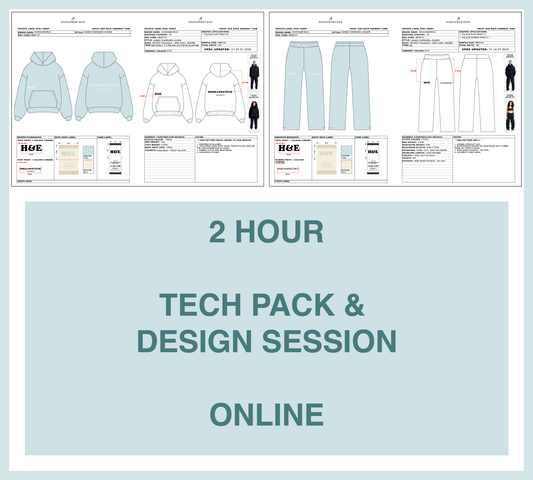
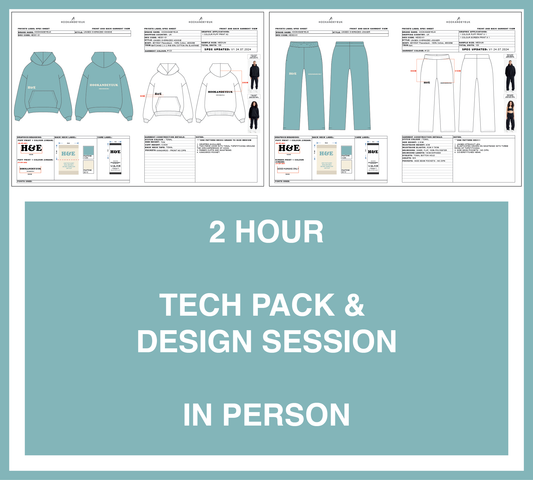
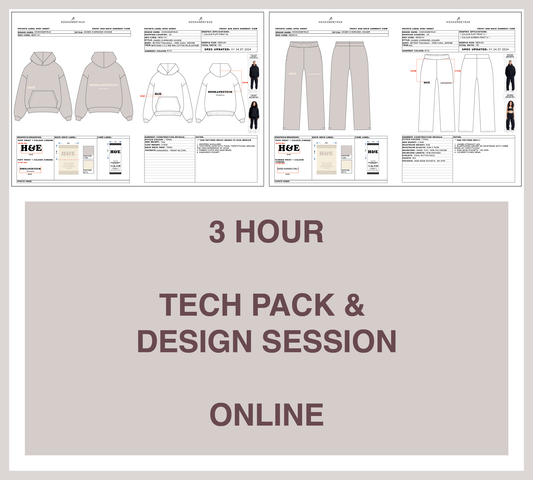
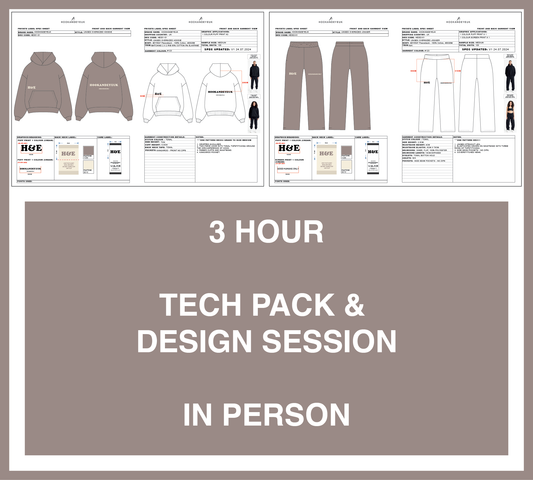
At Hook and Eye UK, fabric specification is a core part of our design process. Our designers ensure every fabric detail is clearly discussed and defined, reducing errors and improving sample accuracy.
Through our live tech pack and design sessions, we:
- Build detailed, factory-ready tech packs
- Guide fabric selection using real-world fabric cards from our library of over 600 fabrics
- Prevent costly sampling mistakes
- Liaise directly with our manufacturer teams on your behalf
Book a Tech Pack & Design Session with Hook and Eye UK and ensure your streetwear garments are developed with the right fabrics from the very start.
Hope you found this helpful,
H&E team :)

About the Author: Bethany is an experienced fashion designer at Hook and Eye UK, with a First-Class BA (Hons) degree in Fashion from the University of Northampton. She is the recipient of both the Fashanne East Midlands Design Award and the CORDURA Durable Design Award, recognising excellence in design and durability. Bethany began her career as a Design Assistant within the uniform industry, contributing to ranges for major brands including HSBC, EasyJet and Costa Coffee. She later worked as an Accessories Designer, creating licensed products for leading UK retailers such as Next, M&S and New Look. She joined Hook and Eye UK in November 2023.