
When a garment comes back from the factory wrong, the instinct is to blame the manufacturer. In our experience, that is almost never where the problem actually started. The vast majority of production issues are not caused by bad factories; they are caused by unclear communication.
A brand founder who approaches a manufacturer with a complete, precise tech pack and a proper system for handling changes will get consistently better results than one working from a vague brief and a few reference photos. The factory has not changed. The quality of the instructions has.
The good news is that this is entirely within your control. Here is how to communicate with a clothing manufacturer in a way that gets you the garment you actually designed, drawn from the process we use with our own manufacturing partners every day.
Start With a Complete, Well-Structured Tech Pack
Everything begins with the tech pack. It is the document your entire relationship with the factory is built on, and the single most important tool you have for communicating clearly. A vague tech pack forces the factory to make assumptions, and every assumption is a chance for your garment to drift away from what you intended.
A complete tech pack should give the factory clear reference points from the very first message. That means:
• A cover page with the product name, style number, version, date, and your contact details, so every conversation has a shared reference from the outset
• Flat sketches showing front, back, and side views, with construction details clearly called out on the drawing
• A full sized digital pattern with accompanying measurement chart, or a physical reference garment with size specifications attached
• A full bill of materials specifying every fabric, trim, label, and thread
• Construction details written in precise terms, not 'good stitching' but '5-needle coverstitch, 6mm width'
• Colourways with Pantone codes or physical swatch references
• Artwork placements with the actual print or embroidery files
• Labelling and packaging instructions
• Fit comments, if you have already tested samples
Line drawings / construction illustrations and bills of materials are built in Adobe Illustrator, the industry standard, while digital patterns are in specific pattern cutting software. Measurement charts are usually managed in Excel. You do not need to produce these yourself, but knowing what a professional tech pack is made of helps you recognise whether the one you are working from is actually complete.
If you do not yet have one, our tech pack template gives you a proper structure to start from.
It is also worth understanding the difference between a full tech pack and a spec sheet before you approach a factory; the two are often confused, and sending only a spec sheet is a common way that communication breaks down early.
If you are still weighing up the investment, our guide to tech pack costs explains what goes into the pricing.
Use Precise Language, Not Subjective Descriptions
A tech pack is only as good as the language inside it. The goal is to remove every opportunity for interpretation, because what reads as obvious to you may read completely differently to a garment technician working in another country.
The rule is simple: use measurable terms. 'A small seam allowance' means nothing; one person's small is another's standard. '1cm seam allowance' means exactly one thing, everywhere in the world. Apply that same discipline throughout: specific measurements, specific stitch types, specific finishes.
Define any terminology that could be read differently across cultures or regions, and lean heavily on reference images, for overall fit, for individual construction details, and for the standard of finish you expect. If you are referencing a competitor's garment for its fit or a particular construction detail, say so clearly and send a physical sample wherever you can. A garment in the factory's hands communicates more in a moment than a paragraph of description ever will.
Set Up a Communication System Before You Start
One of the most common mistakes new brands make is diving into a factory relationship without agreeing how they are actually going to communicate. Decisions then end up scattered across emails, messages, and calls, and nobody is quite sure which instruction was the final one.
Agree on a single channel before anything else. In our industry, WhatsApp has become the norm, and for a good reason. It creates one chronological, searchable thread of the entire conversation. When you need to check what was agreed about a button colour three weeks ago, it is right there in one place, rather than buried across a dozen separate email chains. That searchability makes tracking changes and requests genuinely easier.
Alongside your channel, you need version control. Every updated tech pack should carry a version number and date — V1 / 2026-10-01, V2 / 2026-10-15 — so that everyone is always working from the latest file and nobody is accidentally producing from an outdated one.
The other system worth putting in place from day one is a graphic coding system. Give every graphic and trim a code built from your brand initials, the technique, and a number. For a brand called Hook and Eye UK, a first puff print graphic would be coded HE-PP-001; a second puff print would be HE-PP-002. It looks like a small detail, but once you have multiple prints running across multiple colourways, this coding is what prevents the wrong graphic ending up on the wrong garment. It removes an entire category of confusion before it can happen.
Finally, keep a revision log so every change to the tech pack is tracked in one view:
|
Version |
Date |
Changes made |
|
v1 |
10 Sept 2026 |
Initial draft |
|
v2 |
20 Sept 2026 |
Updated measurements and bill of materials |
|
v3 |
01 Oct 2026 |
Added revised artwork placement |
This kind of log takes seconds to maintain and saves hours of untangling later. Everyone can see, at a glance, exactly what changed and when.
Use Visuals, Not Just Words
Some things are almost impossible to describe accurately in writing, no matter how precise your language. This is where visuals do the heavy lifting.
A short photo or video can clarify a construction detail that would take several confusing paragraphs to explain: how a collar should sit, how a pleat should fall, how a specific seam should be finished. Send physical swatches or reference garments wherever possible too, especially when fabric hand-feel or colour matching matters, because no screen reproduces those things reliably.
And once sampling begins, keep your comments and revisions inside the tech pack itself, dated and in context, rather than in a separate document that drifts out of sync. The tech pack should always be the single source of truth.
The Sampling Review Process
When your first sample arrives, how you review it determines how many rounds of sampling you end up paying for. This is the stage where disciplined communication pays off most visibly.
Review the sample systematically against the tech pack, measurement by measurement, detail by detail, rather than relying on a general impression of whether it 'feels right'. General impressions miss things; structured checks do not. Rather than firing off feedback in fragments as you notice issues, hold a proper review session and gather everything into one clear, consolidated set of changes. Then document every one of those changes in writing, update the tech pack version, and confirm the factory has received and understood them before the next sample is made.
This is exactly how we work. At Hook and Eye UK, every sampling round is followed by a structured development session with our trained garment developers. Together we review the sample properly, agree on the specific changes needed, and update the tech pack before the next round is ever requested. It is a deliberate, disciplined step rather than a scramble of ad-hoc messages, and it is a big part of why we typically reach sample approval in a single round rather than three or four.
Be Open to Factory Feedback — It Is Not a One-Way Process
It is easy to think of a tech pack as a set of instructions you hand down to a factory. The best manufacturer relationships do not work that way. Your factory has deep expertise in what their machinery can and cannot do, and in which construction methods will actually work at scale.
When a factory suggests a change to construction, listen. When they flag that a material or technique is going to cause problems, take it seriously rather than insisting on your original specification out of principle. They are often seeing a production issue you cannot see from a design drawing. A founder who treats the relationship as collaborative, rather than purely transactional, ends up with better garments and a factory that is genuinely invested in getting them right.
Build the Relationship Over Time
Manufacturing is a long process, and the founders who do best are the ones who treat their factory relationship as exactly that, a relationship, not a series of one-off transactions.
Be mindful of time zones and factory holidays. If your production is based in China, Chinese New Year in particular brings an extended shutdown that needs planning around, not discovering at the last minute. Respond to queries quickly and clearly, because factories move fast and a delayed answer from you can hold up an entire run. And approach the whole thing as a two-way professional relationship built on mutual respect. Trust and goodwill, built over time, are what get problems resolved quickly and calmly when they inevitably arise.
Final Thoughts
The quality of your communication, before and during sampling, is the single biggest controllable factor in how smoothly your production goes. You cannot control everything about manufacturing, but you can control how clearly you brief, how precisely you specify, and how well you manage changes. Get those right to avoide problems happen in the first place.
Mostly the brands that struggle are the ones who approached a good factory underprepared.
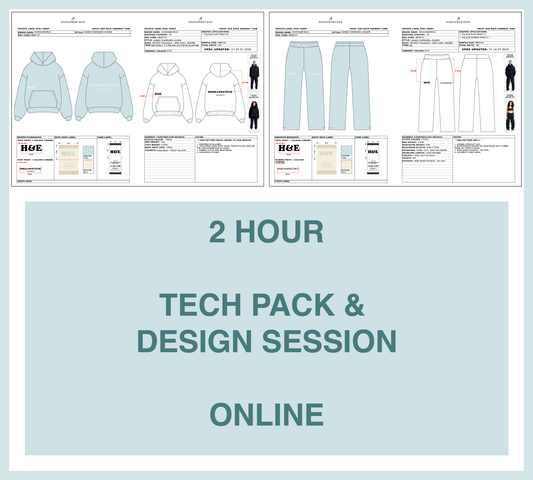
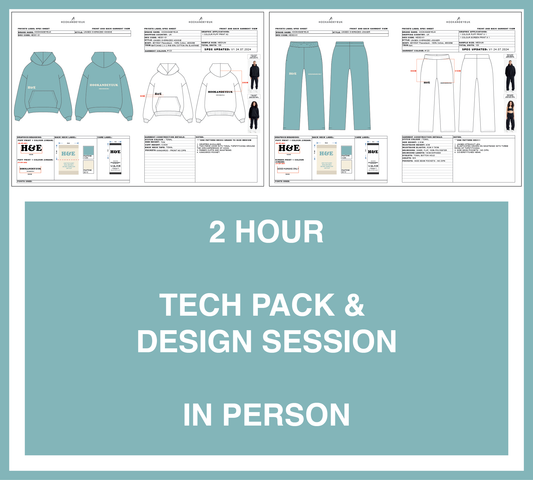
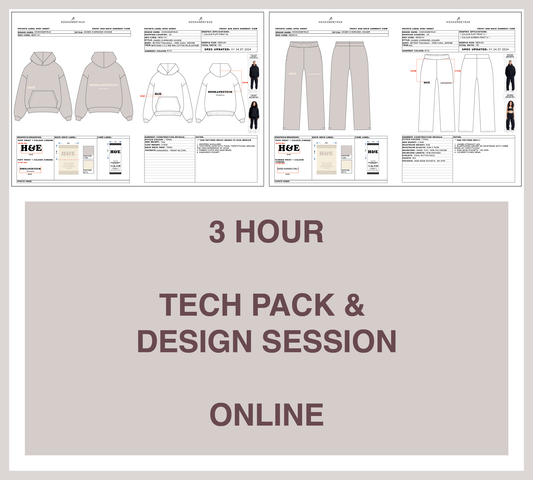
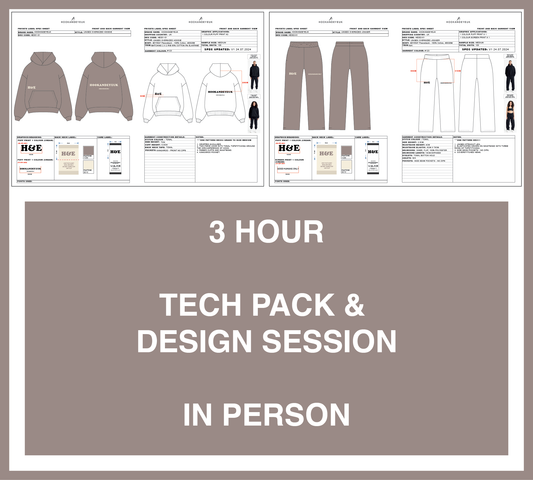
If you would rather work with a team that handles all of this for you- the tech pack, the factory communication, the sampling reviews, and the version control- book a tech pack design session with us and we will manage the entire process on your behalf.
How Hook and Eye UK Can Help
Communicating clearly with a factory takes experience most first-time founders have not had the chance to build yet. That is exactly what we do for our clients; we sit between your brand and the manufacturing floor and make sure nothing gets lost in translation.
When you work with us, we:
• Build your complete, factory-ready tech pack, with precise construction specs and a full bill of materials
• Manage all communication with our manufacturing partners directly, in one tracked, searchable thread
• Run a structured development session after every sampling round to review and update before the next
• Maintain full version control so everyone is always working from the latest file
• Guide fabric, trim, and construction decisions using our experience of what actually works in production
Book a Tech Pack & Design Session with Hook and Eye UK and let us handle the communication that gets your garment made right.
Hope you found this helpful,
H&E team :)

About the Author: Bethany is an experienced fashion designer at Hook and Eye UK, with a First-Class BA (Hons) degree in Fashion from the University of Northampton. She is the recipient of both the Fashanne East Midlands Design Award and the CORDURA Durable Design Award, recognising excellence in design and durability. Bethany began her career as a Design Assistant within the uniform industry, contributing to ranges for major brands including HSBC, EasyJet and Costa Coffee. She later worked as an Accessories Designer, creating licensed products for leading UK retailers such as Next, M&S and New Look. She joined Hook and Eye UK in November 2023.