
There is a default assumption a lot of new brand founders carry into their first manufacturing research: UK manufacturers are the safe, trustworthy option, and overseas factories are a gamble. It is an understandable starting point, but it is increasingly out of step with how garment production actually works today.
The honest answer is that neither option is automatically better. What determines the outcome of your production is not the country your manufacturer operates in; it is the capability of the team managing the process and how well-prepared your brand is before production begins.
Here is a clear-eyed breakdown of what UK and overseas clothing manufacturers each offer, and how to think about which route, or combination of both, makes sense for your brand.
Fabric Choice and Material Access
One of the most significant practical differences between manufacturing in the UK and manufacturing overseas is the range of fabrics you can access.
Factories in regions like China are often physically integrated or closely linked with the mills that produce their fabrics. That means direct access to a huge range of materials that most UK factories simply cannot offer in low quantities:
• Performance fabrics and technical knits designed for activewear and outerwear
• Recycled and sustainable fibres, including recycled polyester and organic blends
• Advanced treatments, coatings, bonding, enzyme washing, and specialist finishes
• Custom-developed textiles that are exclusive to specific factory relationships
UK factories, by contrast, tend to work with a narrower fabric range due to a smaller UK fabric industry. A large quantity of UK factories source their textiles from overseas, this adds cost and lead time without increasing your options. There are meaningful exceptions; heritage UK-made fabrics like Harris Tweed remain genuinely unique, but for brands working in sportswear, contemporary fashion, or streetwear, the overseas edge on material variety is substantial.
If fabric innovation or a wide material palette matters to your collection, overseas manufacturing is where that access lives.
Production Technology and What You Can Actually Make
The machinery available at a factory determines what kinds of garments you can produce, and this is an area where the gap between UK and overseas manufacturers has widened considerably in recent years.
Modern overseas factories are built for technically complex construction. They routinely use:
• Automated and high-volume production lines capable of maintaining tight tolerances
• Seamless and bonded construction techniques for performance and contemporary styles
• Laser cutting for precise, clean edges without fraying
• Digital and sublimation printing directly integrated into the production process
• Specialist wash treatments, stonewash, acid wash, garment dye, at scale
UK factories are typically specialists in traditional cut-and-sew production. That is the right approach for certain garment types, particularly high-end tailoring, couture dressmaking, and handmade heritage pieces where craftsmanship and construction method are central to the product. But for the majority of contemporary brand categories, technically complex garment construction (in low units) is harder to execute consistently in the UK, and the cost of doing so is significantly higher.
Know what your garment requires before deciding where it should be made.
Cost and What It Actually Means for Quality
Lower labour costs in overseas manufacturing get misread as a quality or ethical trade-off, in good manufacture companies they are not. If the cost of living is lower, employee wages are also lower.
Ask to see your factories latest audit reports/certificates to ensure working conditions and quality processes are to standard.
The Role of a Garment Developer — the Part Most Brands Miss
Here is a pattern that comes up repeatedly when brands run into problems with overseas manufacturing: they blame the factory. In most cases, the factory is not where the problem started.
Overseas factories communicate in the technical language of garment construction. They work from detailed specifications, precise measurements, stitch types, construction sequences, tolerance windows, and they execute what they are given. When a brand sends unclear or incomplete documentation, the factory makes assumptions to fill the gaps. Those assumptions are what produce garments that do not match the original design.
A trained garment developer prevents that breakdown. Working from a properly prepared tech pack, one that specifies everything the factory needs to know, a garment developer can bridge the technical and communicative gap between your brand's vision and what actually comes off the production line. That includes:
• Building accurate digital patterns and accompanying measurement charts
• Specifying construction details: stitch types, seam finishes, thread colours, tolerances
• Translating design decisions into factory-ready instructions
• Managing communication across language and cultural differences
• Overseeing fit, grading, and quality control through sampling and into bulk
With that layer in place, overseas factories consistently produce to a very high standard. Without it, the same factories, and the same brand budget, produce unpredictable results. The factory is rarely the variable. The quality of the technical direction is.
Lead Times, Scalability, and Long-Term Production
Initial lead times when working with overseas manufacturers tend to be longer, particularly through the development and first sampling stage. That is worth planning for.
What overseas factories are built for, however, is volume, repeatability, and the ability to scale. Once your product is developed and your factory relationship is established, repeat orders become efficient and consistent. Seasonal scaling, running the same garment in new colourways, increasing order quantities as your brand grows, is something overseas production handles well.
UK factories can often offer faster turnaround times for sampling and very small production runs, but they may have more limited capabilities when it comes to the type of garment that can be produced and fabric options making scalability more difficult.
Ethics and Sustainability
The assumption that overseas manufacturing means lower ethical standards is one of the most damaging for brands trying to make genuinely informed decisions.
Many factories operating in China and similar regions have invested heavily in sustainability infrastructure:
• Third-party ethical certifications including GOTS, OEKO-TEX, and WRAP
• Water recycling systems and closed-loop dyeing processes
• Renewable energy integration in production facilities
• Access to sustainable and recycled fabric ranges at commercial scale
Ethical production overseas is absolutely achievable. What it requires is proper factory vetting, transparency about working conditions, ongoing auditing, and the kind of long-term partnership relationships that allow brands to maintain genuine oversight.
UK factories operate under strict domestic labour law, which provides a certain baseline. But UK manufacturers often lack access to large-scale sustainable fabric innovation and the eco-process infrastructure that leading overseas factories have invested in. Neither option is inherently more sustainable than the other; what matters is how seriously the brand and its manufacturing partners treat it.
Brand Perception - Does "Made in China" Hurt You?
Short answer: No. Lack of transparency about your manufacturing hurts you. The location itself does not.
Customer expectations in fashion have shifted. What people care about when they buy clothing is the quality of the product, how long it lasts, whether the materials feel and perform as described, whether the garment has been made ethically in good working conditions with fair wages and whether the brand is honest about how it operates.
Brands that clearly and confidently explain their manufacturing choices, including why they produce overseas, what access that gives them to better fabrics or technology, and how their products are made ethically and their quality control works, consistently earn more trust from their customers than brands that are vague or evasive on the subject.
The story of how your garment was made, told honestly, is a brand asset. The manufacturing location is just one part of that story.
How Hook and Eye UK Works — The Hybrid Model
Hook and Eye UK is a Birmingham-based clothing design and manufacturing company. All design work, tech pack creation, pattern making, product development, and production management are handled by our team here in the UK.
The manufacture and sample construction is carried out in China, through our integrated factory partnerships. We work directly with our main garment manufacturer and collaborate with specialist accessory and packaging factories for brands that need them.
What this means in practice for our clients:
• You communicate with a UK team, designers, product developers, and pattern cutters who understand both your brand and the technical requirements of production
• You get access to the fabric range, machinery, and production capabilities of advanced Chinese manufacturing
• Samples are sent directly from our studio via Special Delivery, no factory liaison required from your end
• All bulk orders are delivered DDP (Delivered Duty Paid), so there are no customs surprises or unexpected import fees on arrival
The result is a model that combines the communication clarity and technical expertise of a UK design team with the material access, production capability, and cost efficiency of our overseas manufacturing partners. You do not have to choose between them.
Do I Choose a UK or Overseas Manufacturer?
The question is worth asking, but the answer is rarely as simple as picking a side. What decides the quality of your finished garment is not whether your manufacturer is based in Birmingham or Guangzhou. It is the capability of the people managing the development process, the quality of the technical documentation sent to the factory, and the strength of the relationships built over time.
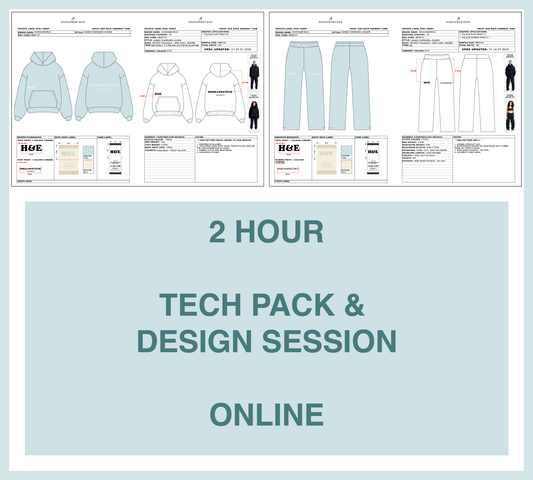
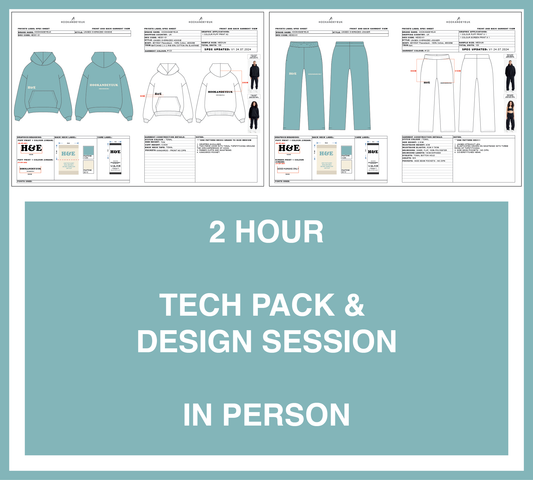
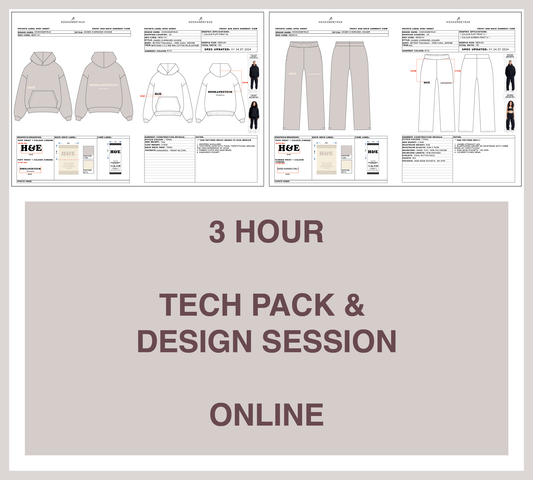
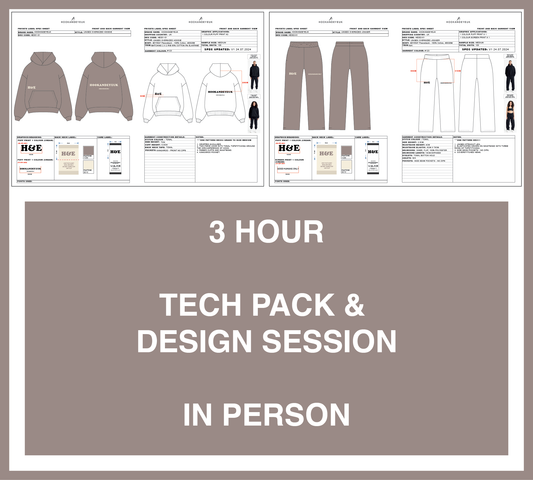
If you are starting out and trying to figure out which route makes sense for your brand, it helps to talk it through with people who work across both. Book a Tech Pack and Design Session with the Hook and Eye UK team, and we can walk you through your options based on what you are trying to make.
How Hook and Eye UK Can Help
Whether you are still deciding on your manufacturing approach or ready to get your first collection into development, Hook and Eye UK can take you through the full process, from design and tech packs through to sampling, production management, and delivery.
In a Tech Pack and Design Session with us, we:
• Work with you to develop factory-ready tech packs that eliminate guesswork in production
• Guide you through fabric and trim selection from our 600+ sample library
• Advise on realistic timelines and minimum order quantities for your collection
• Manage all communication with our manufacturing partners on your behalf
• Handle sampling, quality control, and delivery, DDP for all bulk orders
Book a Tech Pack & Design Session with Hook and Eye UK and let's figure out the right manufacturing approach for your brand.
Hope you found this helpful,
H&E team :)

About the Author: Bethany is an experienced fashion designer at Hook and Eye UK, with a First-Class BA (Hons) degree in Fashion from the University of Northampton. She is the recipient of both the Fashanne East Midlands Design Award and the CORDURA Durable Design Award, recognising excellence in design and durability. Bethany began her career as a Design Assistant within the uniform industry, contributing to ranges for major brands including HSBC, EasyJet and Costa Coffee. She later worked as an Accessories Designer, creating licensed products for leading UK retailers such as Next, M&S and New Look. She joined Hook and Eye UK in November 2023.