
When you put on a hoodie, jacket, or pair of trousers, you’re wearing the result of a process that began long before fabric was cut or sewn. At the heart of garment creation sits a crucial technical skill: pattern cutting. It’s one of the most important stages in clothing development and plays a major role in how a garment fits, functions, and feels when worn.
Understanding pattern cutting helps explain why some garments feel effortless and well-constructed — while others don’t.
What Exactly Is Pattern Cutting?
Pattern cutting (also known as pattern making) is the process of transforming a design idea into a set of precise templates, known as patterns, which are used to cut each piece of fabric required to construct a garment.
A pattern works much like a blueprint. Just as an architect creates plans before a building is constructed, a pattern cutter creates the shapes that define how a garment will be assembled.
These patterns:
- Define the overall structure of the garment
- Determine how it fits the body
- Guide the sewing and construction process
- Ensure consistency from sample to production
Without accurate patterns, garment construction becomes guesswork rather than a controlled, repeatable process.
Why Is Pattern Cutting So Important?
Pattern cutting is where creativity meets technical precision. A sketch or design concept has no practical value unless it can be translated into a wearable garment.
Good pattern cutting ensures that:
- The garment fits the human body properly
- Design details are accurately interpreted
- Fabric drapes and behaves as intended
- All pieces align correctly during sewing
- The garment can be reproduced consistently at scale
It is a blend of engineering and creative problem-solving, requiring a deep understanding of body shape, fabric behaviour, and construction techniques.
Key Steps in the Pattern-Cutting Process
Although approaches can vary, the pattern-cutting process usually follows several core stages.
Starting With a Block or Garment Reference
A block is a basic pattern with no design features — only the essential shapes needed to fit the body. A sample reference is a physical garment that the pattern cutter measures and creates digital scans of to produce a basic pattern. Pattern cutters start with a block or sample reference and adapt it to create new styles, silhouettes, and fits.
Interpreting the Design
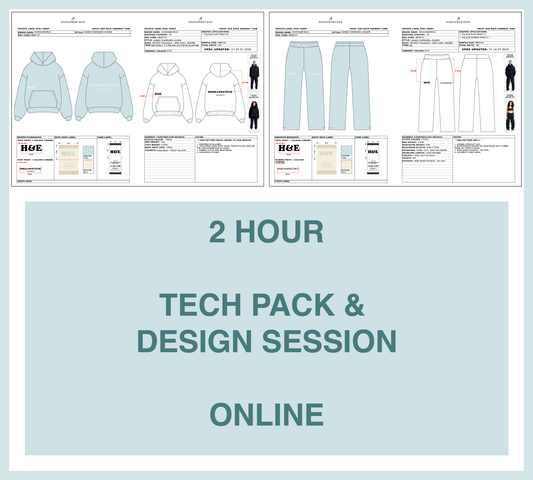
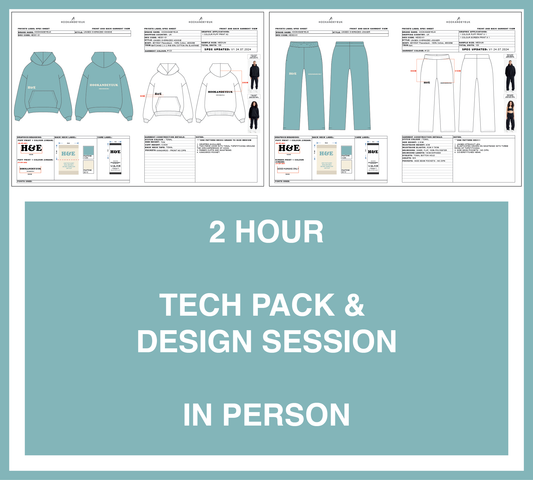
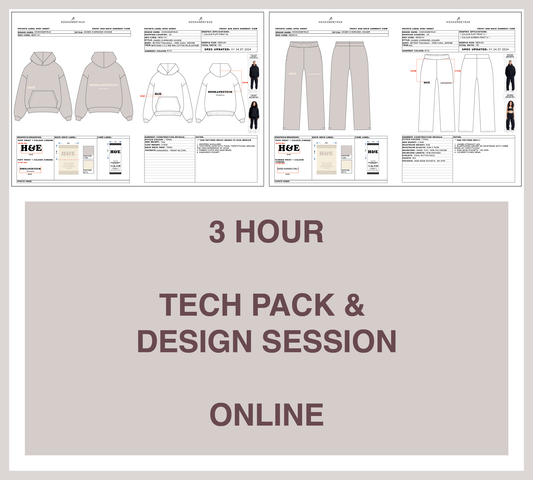
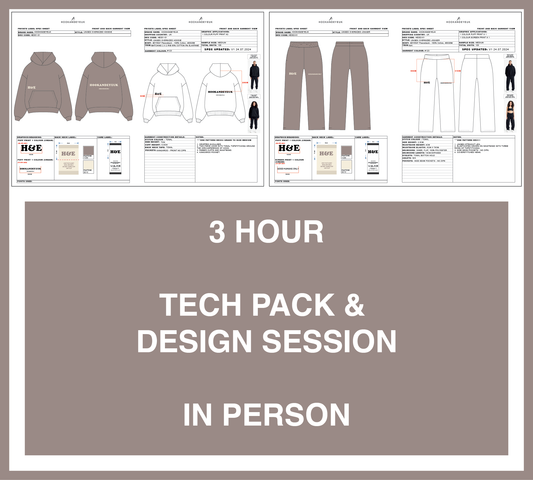
Using information from a tech pack, the pattern cutter analyses:
- Silhouette and proportions
- Fabric type and stretch
- Style lines and panels
- Construction details
This step is where the design concept is translated into a workable technical form.
Drafting the Pattern
The pattern cutter drafts each piece using measurements, technical knowledge, and specialist tools. This is where shaping elements such as darts, pleats, seams, and panels are introduced.
Drafting can be done by hand or digitally, depending on the workflow.
Initial Sampling
A first sample is created to test fit and construction. This allows adjustments to be made before moving forward, helping avoid issues later in production.
Finalising the Pattern
Once fit and proportions are approved, the pattern is finalised and, if required, graded into multiple sizes. At this stage, the pattern is ready for production or personal use.
Tools of the Trade:
Manual Pattern Cutting
Traditional or “hand” pattern cutting uses a range of physical tools, including:
- Pattern paper
- Rulers and French curves
- Notchers and awls
- Chalk and pencils
- Fabric shears
This method is still used in some settings, particularly for bespoke work or training, but it can be time-consuming and less flexible when changes are required.
Digital Pattern Cutting Software
Modern garment development increasingly relies on digital pattern cutting. At Hook and Eye UK, all pattern cutting is done digitally as part of our waste-reduction approach, as it eliminates paper use and allows for faster, more accurate revisions.
Common digital pattern-cutting software includes:
Digital pattern cutting allows patterns to be drafted, adjusted, graded, and visualised more efficiently, improving both accuracy and sustainability.
Different Types of Pattern Cutting
There are several approaches to pattern cutting, depending on the garment and design intent.
Flat Pattern Cutting
Patterns are drafted on a flat surface using measurements and blocks. This is the most common method used in both home sewing and industry.
Draping (3D Pattern Cutting)
Fabric is shaped directly on a mannequin to create patterns in three dimensions. This method is often used for fluid garments or more sculptural designs.
Digital Pattern Cutting
Specialist software is used to draft, grade, and visualise patterns, making it the preferred method for modern fashion production.
Pattern Cutting from a Measurement Chart
Patterns can be created using a measurement chart alone. A measurement chart provides the pattern cutter with key points of measure—such as bust, waist, hip, and garment length—but it doesn’t explain how those points should be connected. Interpreting the chart requires experience and informed judgement, as the pattern cutter must make educated decisions about proportion, balance, ease, and shape to translate flat measurements into a three-dimensional garment. Crucially, the person creating the measurement chart in the first place must also be highly experienced, as incorrect or poorly considered measurements will directly result in poorly fitting patterns.
At Hook and Eye UK, we take a more precise and reliable approach when sampling. Rather than starting with a measurement chart that is later converted into a pattern, we create the digital pattern directly from a well-fitting reference garment. We take detailed measurements from the physical garment itself and combine these with digital scans, allowing us to accurately capture its shape, proportions, and construction. This process significantly reduces guesswork, resulting in more accurate patterns and, ultimately, better-fitting garments. From this pattern an extremely precise measurement chart is produced which can later be used to check the measurements of the samples created and form a grading chart (for bigger and smaller sizes).
Who Does Pattern Cutting?
Pattern cutting is typically carried out by:
- Pattern cutters or pattern makers
- Fashion designers with technical training
- Tailors and costume designers
- Garment technologists
In professional settings, pattern cutters work behind the scenes, bridging the gap between design and production.
Pattern Cutting at Hook and Eye UK
At Hook and Eye UK, our experienced in-house pattern cutters handle all pattern cutting requirements. We begin with a base fit reference garment that you already know and trust, ensuring a strong foundation for fit.
From there, our team incorporates the design details outlined in your tech pack and design session directly into the pattern. While this approach takes slightly more time at the start, it significantly streamlines the overall development process.
By achieving a more accurate fit from the beginning, we reduce unnecessary rounds of sampling — saving time, lowering costs, and helping bring your final garment to life more efficiently.
Final Thoughts
Pattern cutting is both an art and a science. It’s the meticulous, often unseen work that transforms ideas into garments that fit, function, and can be reproduced consistently.
Whether you’re creating a single piece or preparing for production, strong pattern cutting is the foundation of well-made clothing — and one of the most important steps in the garment development journey.
Hope you found this helpful,
H&E team :)